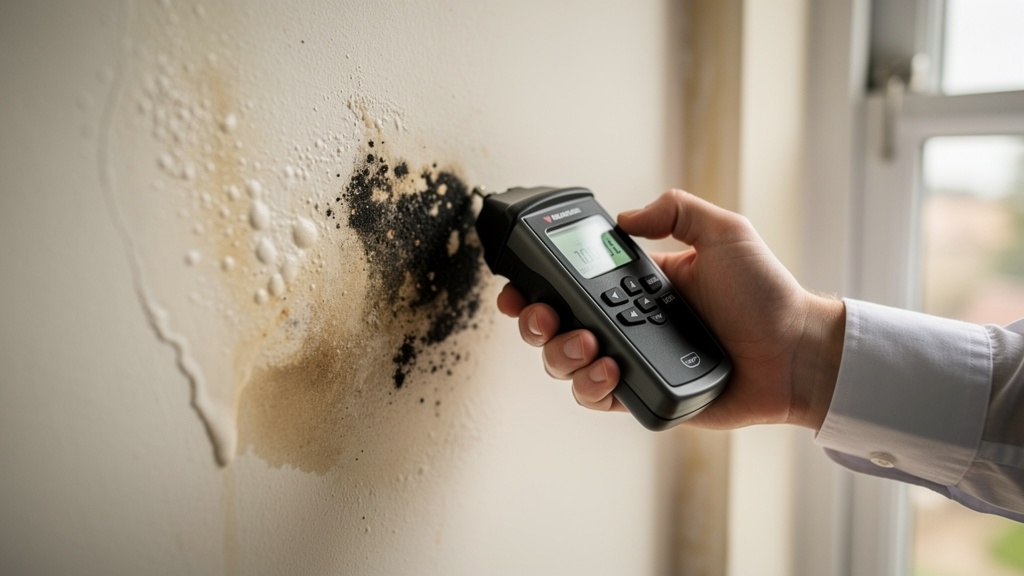
Subsidence is one of the most feared words in the property world. As a Surrey Surveyor firm serving buyers and homeowners across the county, we encounter subsidence-related concerns regularly — and the truth is more nuanced than the horror stories suggest. Here is what you really need to know.
What Is Subsidence?
Subsidence occurs when the ground beneath a property sinks or shifts, causing the building's foundations to move. This movement can lead to cracking in walls, sticking doors and windows, and in serious cases, significant structural damage.
It is important to distinguish subsidence from settlement. Settlement is the normal, gradual bedding-in of a property's foundations during and after construction, and is expected in new builds. Subsidence, by contrast, is the continuing, ongoing downward movement of the ground — often accelerating with changes in weather, soil moisture or root activity.
Why Is Surrey Particularly Susceptible to Subsidence?
Surrey sits on a complex mix of geological substrates, but much of the county — particularly in the northern and eastern areas around Guildford, Woking, Leatherhead, Epsom and into the London clay areas near Croydon and Sutton — is underlain by shrinkable clay soils. Clay is highly sensitive to moisture: it swells when wet and shrinks when dry.
During prolonged hot, dry summers — which are becoming more frequent with climate change — clay soils can lose significant volumes of moisture, causing them to shrink and the ground above to subside. Trees and large shrubs exacerbate this effect dramatically, as their roots extract moisture from the surrounding soil over a large area.
Surrey also has significant tree coverage, particularly large mature oaks, willows, poplars and limes — all species with extensive, moisture-hungry root systems. Properties within 15 metres of such trees, particularly in clay soil areas, carry an elevated subsidence risk.
What Are the Signs of Subsidence?
Not all cracks mean subsidence, and most cracks do not. But there are specific characteristics that distinguish subsidence cracking from normal settlement or thermal movement:
Diagonal Cracking
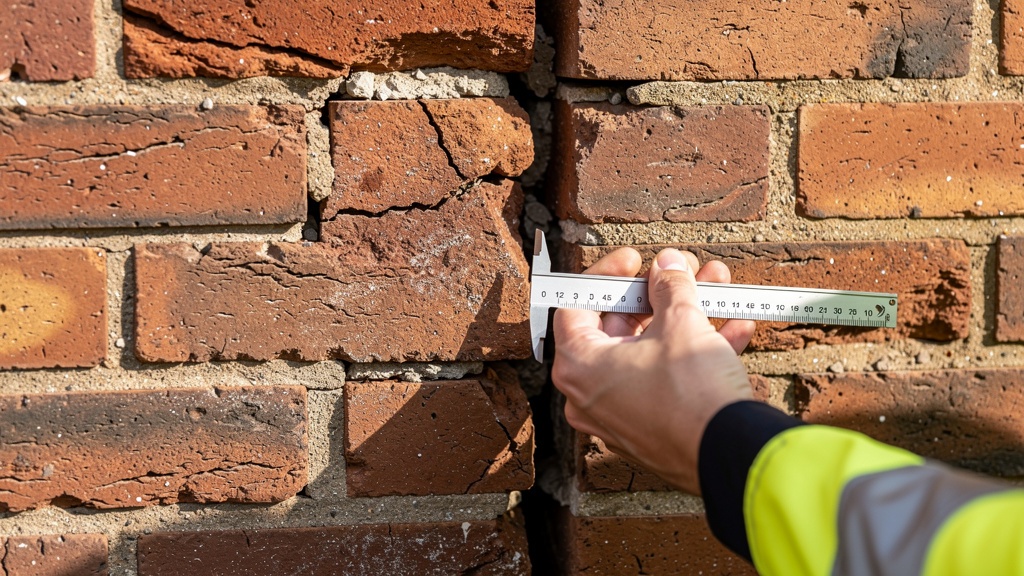
Subsidence cracks tend to run diagonally — typically at 45 degrees from the corner of a window or door opening. This reflects the pattern of stress that is generated when one part of a foundation sinks relative to another. Fine, hairline diagonal cracks are common in older properties and usually not serious. Wide cracks (more than 3–5mm), cracks that widen as they progress, or cracks that are wider at the top than the bottom warrant investigation.
Cracks That Appear Suddenly or Change Over Time
Historical cracking that has been stable for many years is generally less concerning than new cracking that appears suddenly, or existing cracking that widens or changes direction over time. Keep a photographic record of any cracks you notice — date the images and measure the crack width at regular intervals.
Sticking Doors and Windows
Doors or windows that suddenly begin to stick or jam, particularly in warmer months, can be an early sign of structural movement. Timber naturally expands and contracts with humidity, so some seasonal movement is normal. But movement that does not reverse with the seasons, or that is accompanied by cracking around the frames, deserves attention.
Visible Gaps Between Walls, Ceiling and Floor
Gaps developing between a wall and a ceiling, or between a wall and the floor, can indicate differential movement in the building structure. These are often more significant than wall cracks alone.
Sloping Floors
Floors that slope noticeably, particularly in ground floor rooms, can indicate foundation movement. All old properties have some floor unevenness due to age, but significant progressive slopes are worth investigating.
What Causes Subsidence? The Main Risk Factors in Surrey
1. Tree Root Activity
The leading cause of subsidence claims in Surrey and south-east England. Large, moisture-demanding trees within 15 metres of a property — particularly willows, poplars, elms, oaks and limes — can extract enough moisture from clay soil to cause significant ground shrinkage in dry seasons. When roots also invade drainage systems, the problem is compounded.
2. Leaking Drains
A leaking drain beneath or near a property can wash fine soil particles away over time — a process called "wash-out" or "erosion subsidence." This is particularly common with older clay drainage systems that have deteriorated, cracked or had root intrusion. A CCTV drain survey can identify this risk quickly and cost-effectively.
3. Mining and Tunnelling Activity
Parts of Surrey have historical industrial activity, and some areas fall within the zone of influence of old mine workings or tunnels. The Coal Authority's interactive map and a solicitor's mining search can identify whether a property sits within a higher-risk area.
4. Changes in Groundwater Level
Significant changes in groundwater levels — whether through drought, abstraction or local engineering works — can alter the bearing capacity of the soil beneath foundations.
5. Poor Original Construction
Some older Surrey properties were built with shallow foundations that would not meet modern Building Regulations. These can be perfectly stable for decades, but are more vulnerable to soil movement than deeper modern foundations.
What to Do If You Suspect Subsidence
Step 1: Commission a Building Survey
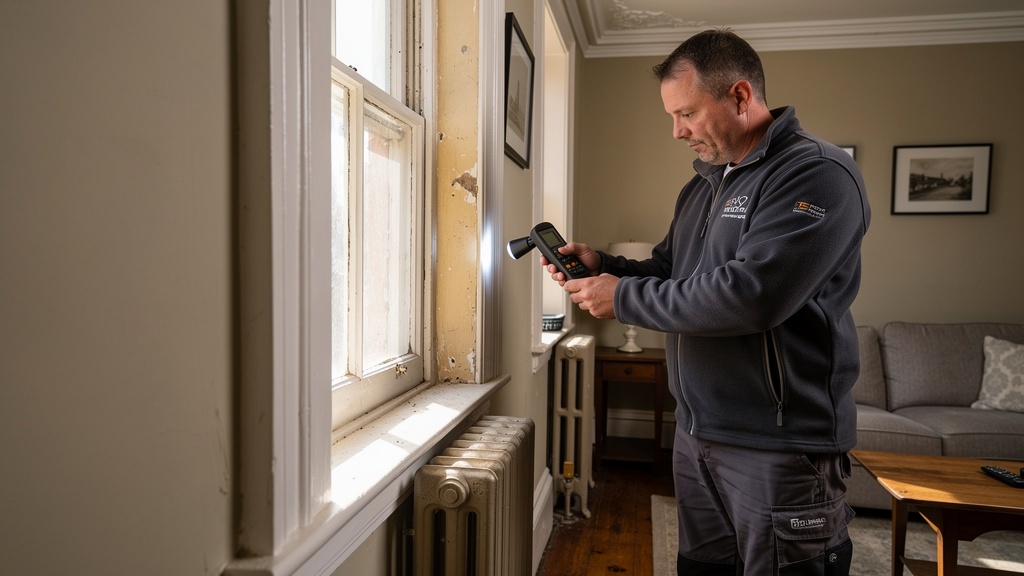
A Level 3 Building Survey by a qualified surveyor is the essential first step. Our surveyors will assess the cracking pattern, inspect the foundations where accessible, check for tree proximity and drainage risk, and provide a clear assessment of whether further investigation is required.
Step 2: Get a Structural Engineer's Report
If your building surveyor identifies concerns, they will recommend a structural engineer's assessment. A structural engineer can carry out a more detailed investigation of the foundations and ground conditions, recommend monitoring or remedial action, and produce a report that satisfies insurers and mortgage lenders.
Step 3: Notify Your Insurer
If you own the property and suspect subsidence, inform your buildings insurer promptly. Failing to notify promptly can affect a subsequent claim. Your insurer will arrange their own investigation and, if subsidence is confirmed, manage the remediation process.
Step 4: Consider the Options for Remediation
The main remediation options include underpinning (traditional mass concrete, beam-and-base, or resin injection), root management (tree removal or root barriers) and drainage repair. The appropriate solution depends on the cause and severity of movement. Costs range from a few thousand pounds for drain repairs to £30,000–£100,000+ for traditional underpinning of a larger property.
Subsidence and Property Buying: What Buyers Need to Know
If you are buying a property with a history of subsidence or that shows signs of potential movement, a thorough survey is absolutely essential. Our advice to Surrey buyers is:
- Always commission a Level 3 Building Survey, not a Level 2 HomeBuyer Report, for any property showing cracking or located near large trees on clay soil.
- Request the vendor's insurance history — properties with a history of subsidence claims will often have endorsements or excesses on their buildings insurance policy.
- Check the mortgage lender's requirements — some lenders have specific requirements for properties with subsidence history.
- Don't be put off automatically — a property where historic subsidence was caused by a tree that has since been removed, and where no further movement has been observed for 10+ years, may well be a sound purchase with appropriate monitoring.
Frequently Asked Questions: Subsidence in Surrey
Is Surrey at high risk of subsidence?
Parts of Surrey — particularly the northern and eastern clay-soil areas — carry a higher-than-average subsidence risk due to the combination of shrinkable soils and large tree coverage. The chalk and greensand areas of the Surrey Hills carry lower risk. A specific soil investigation can clarify the risk for an individual property.
How can I tell if a crack is subsidence or just settlement?
Key indicators of subsidence include diagonal cracking from window and door corners, cracks wider than 3mm, cracks that widen over time, and cracking accompanied by sticking doors and windows. Settlement cracks tend to be finer, more random in pattern, and stable over time. Only a qualified surveyor can definitively assess which is which.
Will subsidence affect my ability to get a mortgage?
Active subsidence will almost certainly affect mortgage availability. Historic, resolved subsidence may not — it depends on the lender and the documentation available (engineer's reports, monitoring records, insurance history). Our surveyors can advise on the likely lender requirements for specific properties.
Should I remove a tree that is close to my property?
Removing a large tree from clay soil can sometimes cause "heave" — the ground rehydrating and swelling upwards, potentially causing just as much damage as the original shrinkage. Any decision to remove large trees near clay-soil foundations should be discussed with a structural engineer first.
How much does subsidence repair cost?
Costs vary enormously depending on cause, severity and method. Drain repairs: £3,000–£10,000. Root management and monitoring: £2,000–£8,000. Traditional underpinning of a semi-detached or detached property: £15,000–£60,000+. Modern resin injection underpinning is faster and often less expensive than traditional methods.
Concerned About Subsidence in Your Surrey Property?
Our RICS-accredited surveyors carry out thorough structural assessments across Surrey. Get a free, no-obligation quote for a building survey today.
Get a Free Quote Defect Analysis