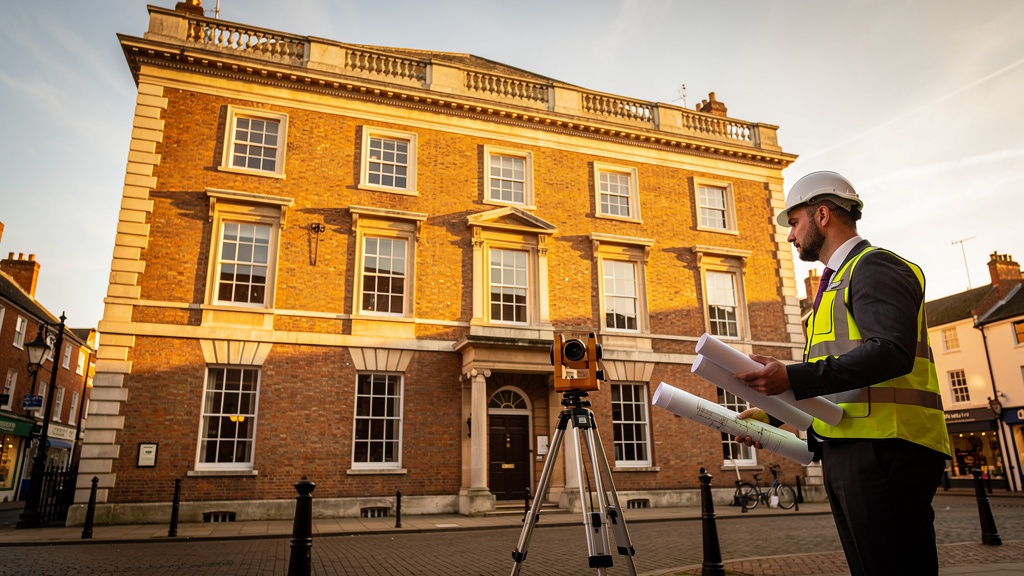
Surrey is home to some of England's finest listed buildings. From medieval farmhouses in the Surrey Hills to Georgian town houses in Guildford, and from Arts and Crafts villas in the commuter villages to Victorian mansion blocks near the M25 – if you're looking for character, Surrey delivers it in abundance.
But buying a listed building comes with responsibilities and complexities that most buyers are simply not prepared for. I've been surveying listed buildings in Surrey for over 25 years, and the single most common issue I see is buyers falling in love with a beautiful property without fully understanding what they're committing to. This guide aims to change that.
What Is a Listed Building?
A listed building is one that appears on the National Heritage List for England (NHLE), maintained by Historic England. Listing gives the building statutory protection to preserve its architectural or historic interest. There are three grades:
- Grade I: Exceptionally important buildings of more than special interest (around 2% of all listed buildings)
- Grade II*: Particularly important buildings of more than special interest
- Grade II: Nationally important and special interest buildings (around 92% of all listed buildings)
In Surrey, Grade II listings are by far the most common. They're found in virtually every town and village, and they range from entire manor houses to small agricultural outbuildings, boundary walls and even mileposts.
Listed Building Consent: What You Can and Cannot Do
This is where many buyers are caught off guard. You cannot make changes to a listed building – inside or out – that would affect its character as a building of architectural or historic interest without first obtaining Listed Building Consent (LBC) from the local planning authority.
This applies to:
- External alterations (replacing windows, changing doors, removing chimneys)
- Internal alterations (removing original features, altering staircases, changing floor coverings)
- Extensions and additions
- Demolition of any part of the listed structure
- Works to structures within the curtilage of the listed building
Carrying out works without LBC is a criminal offence. It can result in prosecution, fines and enforcement notices requiring you to reinstate the original features at your own cost.
Why a Listed Building Needs a Specialist Level 3 Survey
A standard Level 2 survey is not appropriate for a listed building. You need a Level 3 Building Survey carried out by a surveyor with genuine experience of historic buildings and traditional construction. Here's why:
1. Traditional construction materials behave differently
Older buildings were built with lime mortar, which is softer and more flexible than modern cement. Using modern cement in repairs damages the masonry. A surveyor who doesn't understand this will either miss the problem or recommend entirely the wrong repair.
2. Previous unauthorised works
Many listed buildings have been altered without Listed Building Consent at some point in their history. This creates potential legal liability for the new owner. Our surveys specifically investigate whether any alterations appear to have been carried out without consent and whether regularisation may be needed.
3. Energy efficiency works
Listed buildings are generally exempt from some energy efficiency requirements, but improvements are often still possible. Understanding what can be done (and how) requires specialist knowledge of both the building and the consent framework.
4. Higher repair and maintenance costs
Maintenance of a listed building often requires specialist materials and contractors. Like-for-like repairs may need to use traditional materials that are harder to source and more expensive to install. Our surveys reflect these realistic cost levels.
What Our Listed Building Survey Covers
When we survey a listed building in Surrey, our Level 3 report covers:
- Assessment of all construction materials and methods used
- Identification of any repairs using inappropriate modern materials
- Evidence of previous alterations and whether LBC may have been required
- Assessment of the roof structure (where accessible), including any original timber elements
- Damp and timber assessment using calibrated equipment
- Advice on appropriate repair and maintenance materials
- Guidance on what can and cannot be changed under the listing
- Estimated repair costs using realistic, period-appropriate material costs
Case Study: The Georgian Farmhouse That Almost Cost £80,000
We surveyed a Grade II listed farmhouse near Haslemere for buyers who had fallen in love with its original features and rural setting. Our survey identified that a previous owner had installed a damp-proof injection system in the lime plasterwork walls – exactly the wrong treatment for a building of this construction. The injected DPC had created a hygroscopic layer in the plaster that was causing more damp than it cured. Removing and replacing the plasterwork throughout using the correct lime system was estimated at £65,000–£80,000. The buyers renegotiated a significant price reduction and proceeded with a clear understanding of what lay ahead.
Buying a Listed Building: Our Practical Advice
- Check the listing description before making an offer. The NHLE entry tells you exactly what is listed and at what grade. It may include outbuildings and boundary walls you hadn't considered.
- Commission a specialist Level 3 survey from a surveyor with genuine historic building experience.
- Ask about previous works – your solicitor should carry out searches that reveal planning and listed building consent history, but your surveyor can identify physical evidence of works that may not have been consented.
- Budget realistically for ongoing maintenance. Listed buildings require more maintenance, not less, and the materials are more expensive. A maintenance fund of 2–3% of property value per year is a reasonable starting point.
- Embrace the character – listed buildings are remarkable properties. The restrictions that come with listing exist to protect what makes them special. With the right approach, they can be maintained and even improved while preserving everything that makes them unique.
Frequently Asked Questions
Yes, but you'll need Listed Building Consent for most changes that affect the character of the building. The local planning authority will assess each application on its merits. Many improvements – including energy efficiency works, internal modernisation and extensions – can be approved if designed sympathetically and using appropriate materials.
Yes. Standard home insurance policies are often unsuitable for listed buildings. You'll need specialist buildings insurance that covers the full reinstatement cost (including the premium for using traditional materials and specialist craftsmen) and that doesn't require improvements to modern building standards in the event of a major claim. A RICS Registered Valuer can provide an accurate reinstatement cost assessment.
In most cases, listed buildings command a premium in the Surrey market – buyers value the character, history and the fact that listing prevents unsympathetic development nearby. However, the premium needs to be weighed against the higher ongoing maintenance costs and the constraints on what you can do. Our valuers take all of this into account.
Not without Listed Building Consent if that feature contributes to the listing. Even internal features – original fireplaces, staircases, panelling, ceiling mouldings – are protected. Removing them without consent is a criminal offence. Before purchasing, it's worth satisfying yourself that you'll be happy living with the building's original features intact.
Some lenders are more cautious about listed buildings, particularly Grade I and II* listings, and may require an independent RICS valuation. Not all high street lenders will lend on listed buildings. Your mortgage broker should be able to identify appropriate lenders, and our RICS Registered Valuers can provide the valuation report required.